






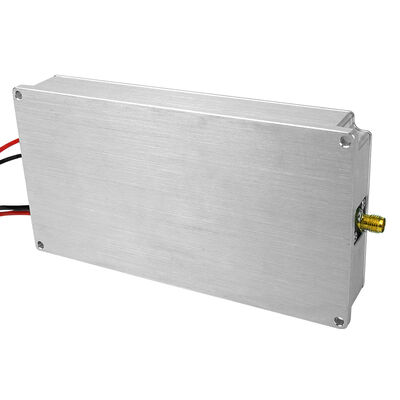
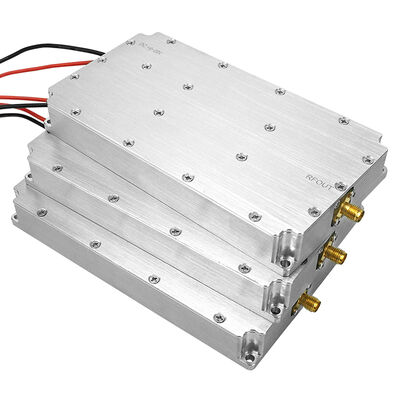
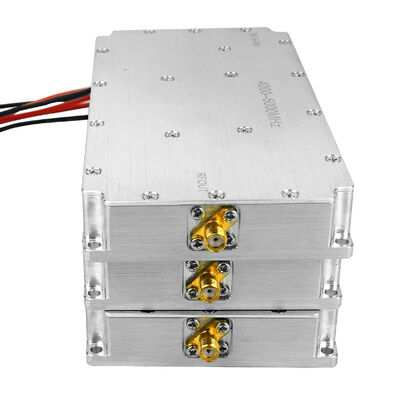

| Place of Origin: | China |
|---|---|
| Brand Name: | TX TELSIG |
| Certification: | SGS, ISO9001 |
| Model Number: | TX-CD50W |
| Minimum Order Quantity: | 1 |
| Price: | Negotiation |
| Packaging Details: | Durable case or box |
| Delivery Time: | 5-8 days |
| Payment Terms: | L/C, T/T, Paypal,etc. |
| Supply Ability: | 1000per month |
| Frequency Range: | 100-1300mhz | Operation: | 12V~28V |
|---|---|---|---|
| Out Put: | -5~5dBm | Current: | >220mA |
| RF Connector: | SMA | Materia: | Aluminum |
| Temperature: | -40℃+80℃ | ||
| Highlight: | rf power amplifier,mmic power amplifier |
||
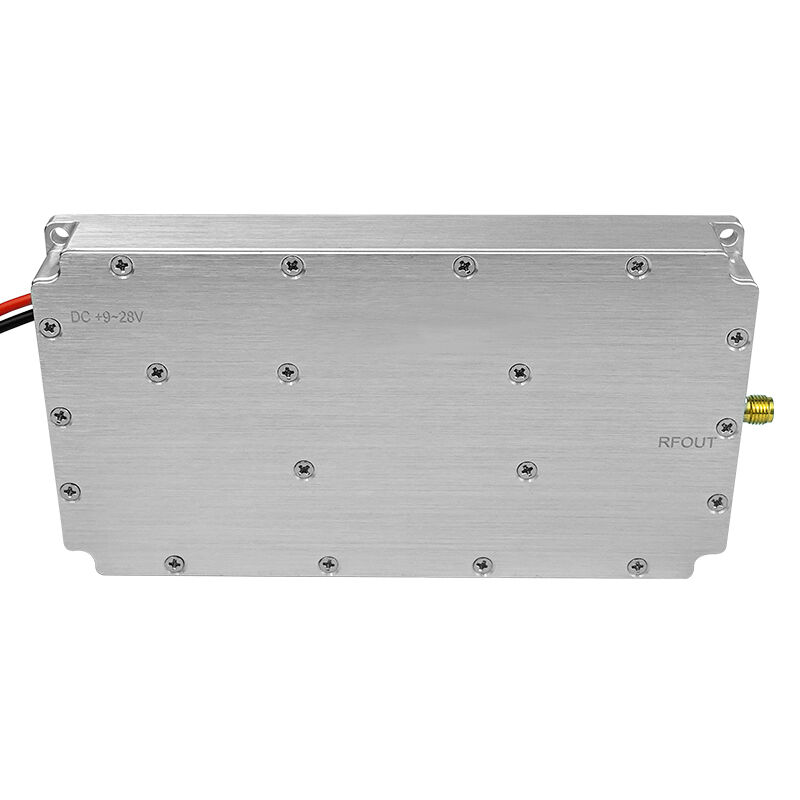
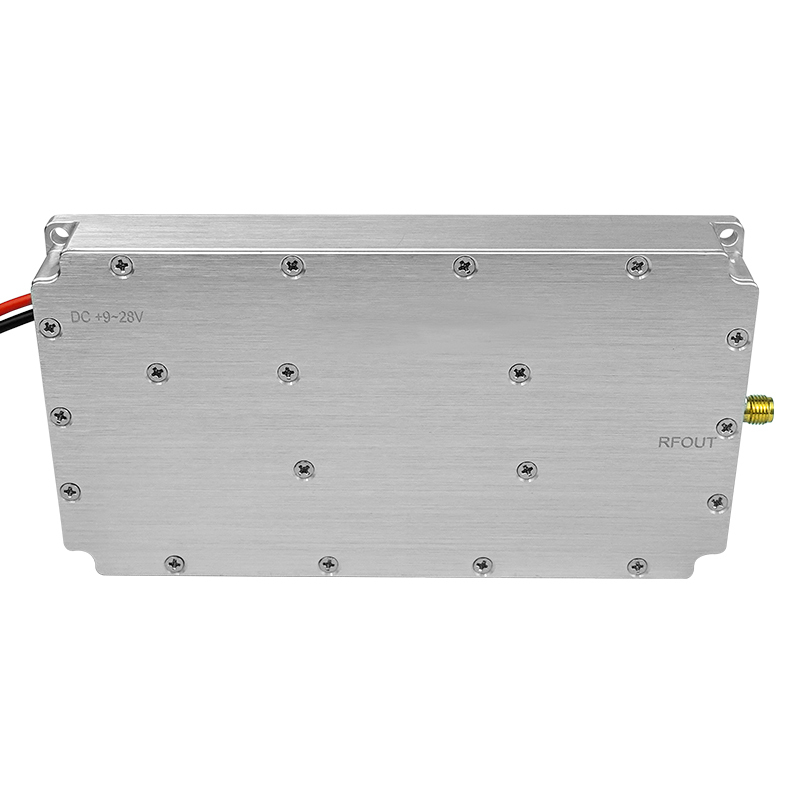
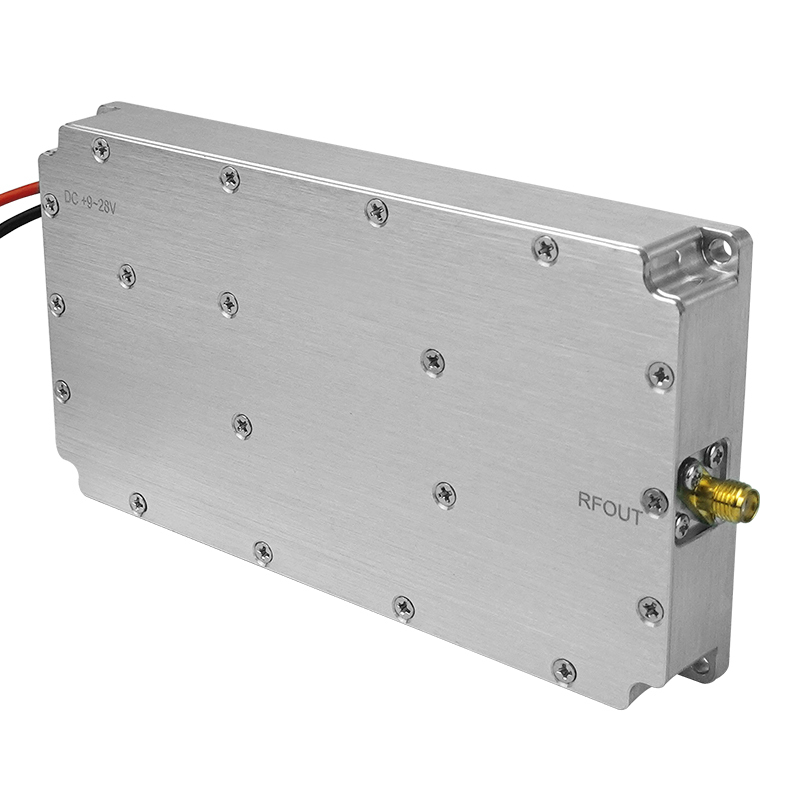
wide band 100-1300mhz digital modulation inversion signal source module
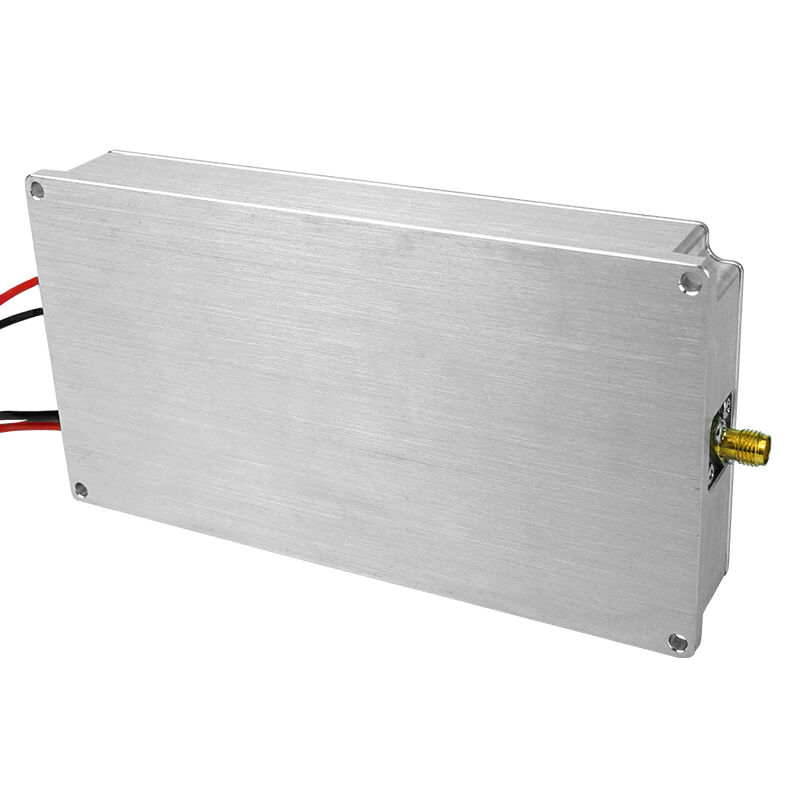
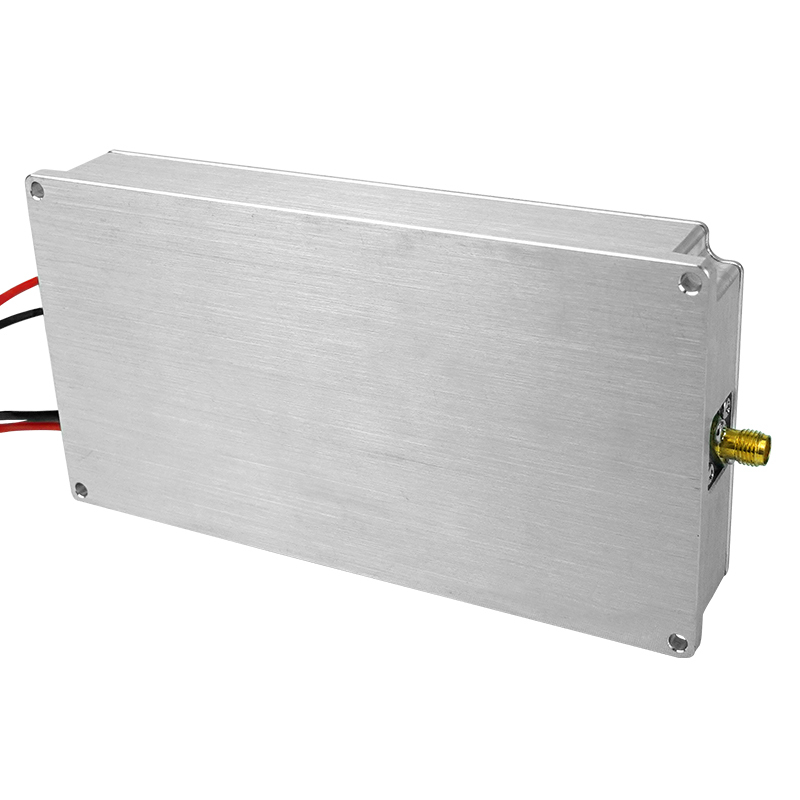
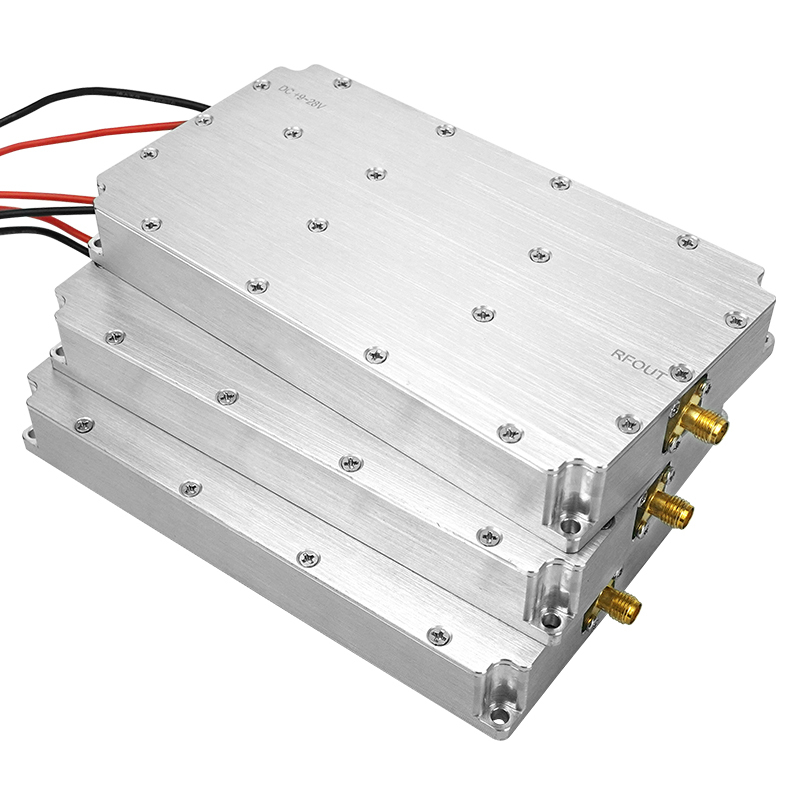
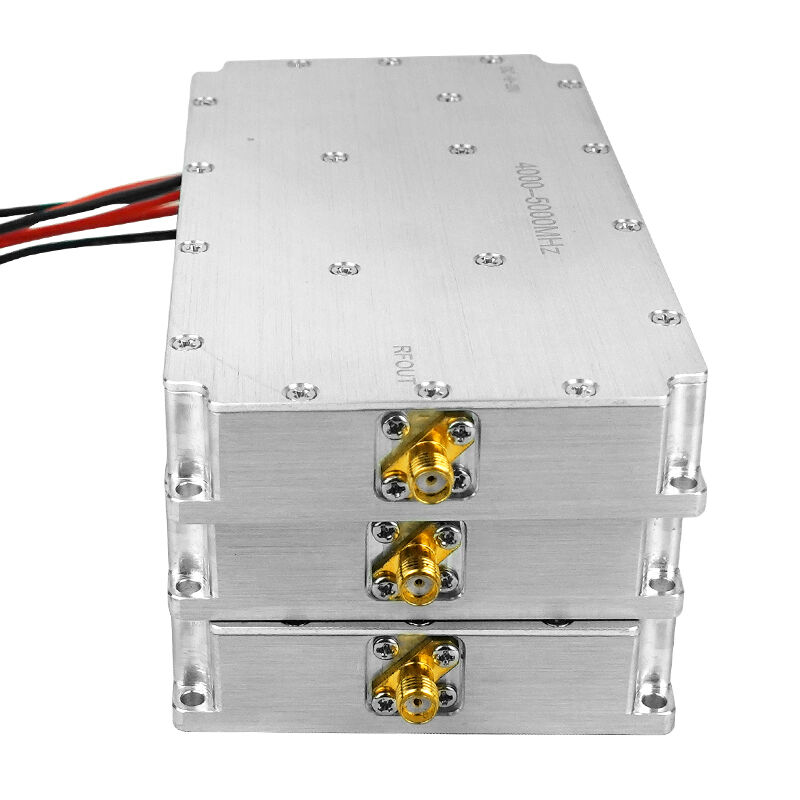
The Digital Modulation Countermeasure Signal Source Module is a countermeasure module that includes a digital modulation countermeasure source. It can be used by adding a power amplifier module and connecting a transmitting antenna. The module uses an FPGA logic chip for main control, combined with the excellent frequency stability of a frequency-locked VCO to create a countermeasure digital modulation signal module for drones. The digital modulation baseband signal is generated internally by the FPGA, loaded onto a carrier wave with the VCO oscillation frequency, and transmitted through the antenna in the countermeasure process. The module uses a 50Ω SMA RF interface output, which can be easily connected to SMA interface power amplifier modules.
Features
Supported frequency: 100-1300MHz
Small form factor, easy for user integration
Industrial-grade design, using industrial-grade chips, suitable for industrial applications
Applications
■ Calibration equipment parameters
■ Broadband signal generators can simulate full-band communication signals from Sub-6GHz to millimeter waves.
■ Electronic interference equipment testing
■ Software-defined radio (SDR) debugging
| Name | Parameter | Remark |
| Voltage | 12~28V | |
| Out put | -5~5dBm | |
| Frequency | 100~1300MHz | Customized |
| Current | >220mA | |
| RF Connector | SMA | RF output |
| RF Interface impedance | 50 Ω | |
| Size | 141*75*21mm | |
| Operating temperature | -40℃+80℃ | Industrial grade |
| Extended functions |
Precautions
Frequency Range Used
The customized frequency band corresponds to the specific drone's wireless signal. Using the frequency outside the range will have no effect.
Interference Distance and Output Power Configuration
The interference distance is related to the output power of the power amplifier and the transmitting antenna. The antenna and output power must be matched; otherwise, the interference distance will be affected. It works best in an unobstructed environment.